React Native's Renaissance: Why the New Architecture Makes it the Top Choice for Cross-Platform Apps
2025-09-05 • 15 min read
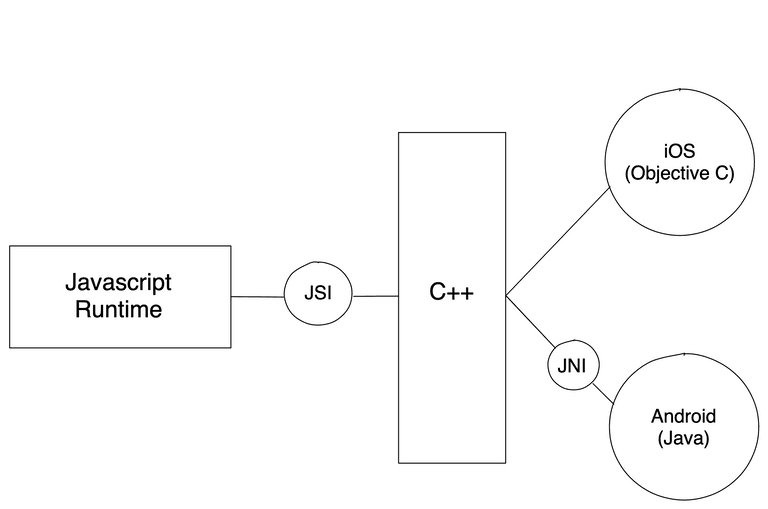
For years, React Native has been a powerful tool for building cross-platform mobile applications. However, it's also faced its share of criticisms, primarily concerning performance and the complexities of its "bridge" architecture. But a new era has dawned for React Native, one driven by a groundbreaking New Architecture that not only addresses these past concerns but elevates the framework to an undeniable front-runner for modern mobile development.
If you're considering building a new mobile app or migrating an existing one, now is the time to seriously look at React Native. The new architecture isn't just an improvement; it's a game-changer.
The Old Guard: Understanding the "Bridge"
Before diving into the new, it's helpful to understand the "old." Previously, React Native relied on a "bridge" to communicate between your JavaScript code (where your app logic lives) and the native components of your device (like buttons, text inputs, and cameras).
Imagine you're trying to talk to someone in another room using only sticky notes. You write a message, stick it on a wall, and then someone else has to read it, translate it, and then go deliver it. This back-and-forth, converting JavaScript commands into native actions and vice-versa, introduced overhead and could sometimes lead to performance bottlenecks, especially with complex UIs or rapid interactions.
Enter the Revolution: The New Architecture's Simple Pillars
The New Architecture fundamentally dismantles this "sticky note" system and replaces it with a direct, super-efficient communication channel. It's built on three core pillars that work in harmony:
1. JavaScript Interface (JSI): The Direct Translator
- What it is: Think of JSI as a universal translator or a direct phone line. Instead of sending messages back and forth across a "bridge," JSI allows your JavaScript code to talk directly to native code without any intermediaries. It's written in C++ for maximum speed and efficiency.
- Why it matters: This direct connection is incredibly fast! It eliminates the need to package up and unpackage messages, making your app much more responsive. Interactions feel snappier, and animations are smoother because there's no delay in communication.
2. Fabric: The Master Renderer
- What it is: Fabric is React Native's brand-new rendering system, built directly on top of JSI. Its job is to efficiently draw your app's user interface (UI) on the screen.
- Why it matters: Because Fabric uses JSI, it can manage UI updates much more effectively. It can "speak" directly to the native UI components, ensuring that what you see on the screen is updated instantly and smoothly. This is key for fluid animations, responsive gestures, and a truly native look and feel. It even allows for exciting future features like concurrent rendering, meaning your app can do multiple UI tasks at once without freezing.
3. TurboModules: The Smart Loaders
- What it is: TurboModules are the next generation of Native Modules. Native Modules are pieces of native code that your JavaScript can use (e.g., accessing the camera, Bluetooth, or file system). TurboModules are "lazy-loaded."
- Why it matters: In the past, all Native Modules had to be loaded when your app started, even if you weren't going to use them. This was like carrying every single tool in your toolbox with you, even if you only needed a hammer. TurboModules are smarter: they only load when your app actually needs them. This makes your app start up much faster and uses less memory, resulting in a leaner and more efficient application.
Why React Native is Now a Great Choice for Cross-Platform Apps
With the New Architecture firmly in place, React Native sheds its previous limitations and emerges as a formidable contender for any mobile development project. Here's why:
- Near-Native Performance: The most significant gain. JSI and Fabric eliminate the performance overhead of the old bridge, leading to apps that feel and perform much closer to native applications. Smoother animations, faster navigation, and quicker startup times are now the norm.
- Improved Developer Experience:
- Type Safety with Codegen: The new architecture introduces automatic code generation, which creates strongly typed interfaces between JavaScript and native code. This means fewer errors, better autocompletion in your IDE, and a more predictable development process.
- Simplified Debugging: Direct communication makes it easier to trace issues and understand how your JavaScript interacts with native components.
- Unified Threading: While still involving multiple threads, the new architecture significantly streamlines their interaction, making it less prone to complex threading issues.
- Future-Proofing Your App: The New Architecture provides a robust foundation for future innovations. Features like concurrent rendering and other performance enhancements will be easier to integrate, ensuring your app stays modern and performant.
- Cost and Time Efficiency (Still a Core Benefit): You write your code once in JavaScript/TypeScript, and it runs on both iOS and Android. This dramatically reduces development time and costs compared to building separate native apps for each platform, all while delivering a higher quality product thanks to the architectural improvements.
- Vibrant Ecosystem and Community: React Native boasts a massive and active community, an extensive library of third-party components, and excellent tooling. This means you'll always find support, resources, and pre-built solutions for almost any feature you need.
- Hot Reloading & Fast Refresh: These beloved developer features are still here, allowing you to see changes to your code reflected instantly on your device or simulator without losing your app's state, leading to incredibly fast iteration cycles.
- Strong Backing: Developed and supported by Meta (Facebook), React Native continues to receive significant investment, ensuring its long-term viability and continuous improvement.
Conclusion
React Native's New Architecture isn't just an update; it's a re-imagining. By replacing the old "bridge" with direct, efficient communication channels like JSI, Fabric, and TurboModules, React Native has shed its performance shackles and emerged as an incredibly compelling choice for cross-platform app development.
If you're looking to build high-performance, beautiful, and cost-effective mobile applications that deliver a native-like experience on both iOS and Android, React Native with its New Architecture is no longer just an option – it's a powerful and pragmatic solution ready to take your ideas from concept to reality faster and more efficiently than ever before. It's truly a renaissance for the framework, making it an exciting time to be a React Native developer.