Understanding Dependency Injection in Express.js
2025-09-05 • 15 min read
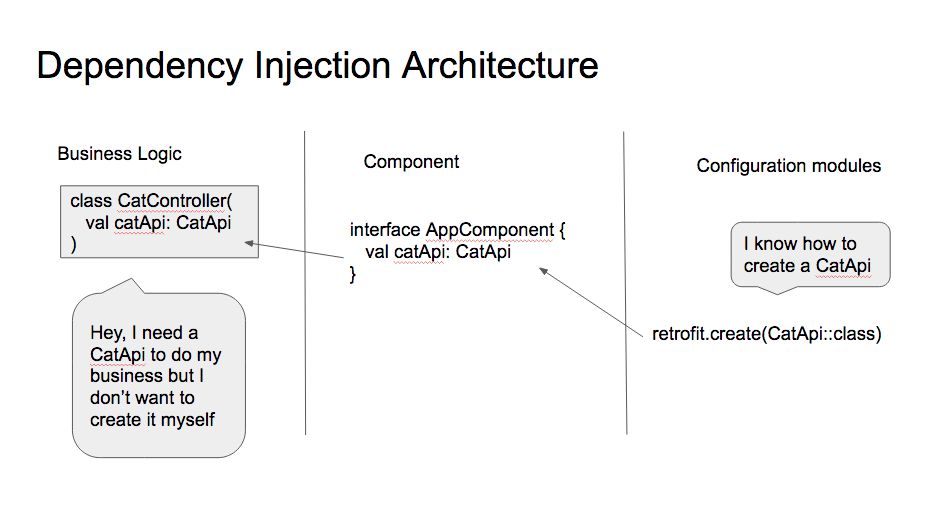
Dependency Injection (DI) is a powerful design pattern that helps you create more flexible, testable, and maintainable applications. At its core, DI is a form of Inversion of Control (IoC), where the control of creating and managing object dependencies is shifted from the object itself to an external entity, often called a container or injector.
Instead of a component creating its own dependencies, like this:
javascriptclass UserService { constructor() { this.db = new DatabaseConnection(); // UserService creates its own dependency } getUser(id) { return this.db.query(`SELECT * FROM users WHERE id = ${id}`); } }
The dependencies are "injected" from the outside, like this:
javascriptclass UserService { constructor(db) { this.db = db; // The dependency is passed in } getUser(id) { return this.db.query(`SELECT * FROM users WHERE id = ${id}`); } } const db = new DatabaseConnection(); const userService = new UserService(db); // Dependency is injected here
This simple change has profound benefits for your application's architecture.
The Advantages of Dependency Injection
Using DI offers several key advantages, especially in a framework like Express.js where you deal with many services, models, and controllers.
- Improved Testability: This is one of the biggest wins. When dependencies are injected, you can easily substitute them with mocks or stubs during testing. You can test your business logic (e.g., a controller) in isolation without needing a real database connection.
- Decoupling and Modularity: Components are no longer tightly coupled to their dependencies. Your UserService doesn't need to know how to create a DatabaseConnection, only that it needs one. This makes your modules more independent and reusable.
- Easier Maintenance and Refactoring: If you need to change the database from, say, PostgreSQL to MongoDB, you only need to change the implementation of the DatabaseConnection and inject the new one. The UserService and any other component using it remain completely unchanged.
- Centralized Configuration: Dependencies are typically managed and configured in a single place (the "container" or composition root), making the application easier to configure and manage.
DI in Practice: An Express.js Example
Let's look at a common scenario in an Express.js application and see how DI can improve it.
Without Dependency Injection
Here's a typical setup where a user controller directly creates its own service, which in turn creates its own database model.
user.model.js
javascript// This model is tightly coupled to a specific database implementation. class UserModel { find(id) { console.log(`Fetching user ${id} from the database...`); return { id, name: "John Doe" }; } } export default UserModel;
user.service.js
javascriptimport UserModel from "./user.model.js"; class UserService { constructor() { // The service creates its own dependency. Hard to test! this.userModel = new UserModel(); } getUserById(id) { return this.userModel.find(id); } } export default UserService;
user.controller.js
javascriptimport UserService from "./user.service.js"; class UserController { constructor() { // The controller creates its own dependency. this.userService = new UserService(); } get(req, res) { const { id } = req.params; const user = this.userService.getUserById(id); if (user) { return res.json(user); } return res.status(404).send("User not found"); } } export default UserController;
The problem here is that everything is tightly coupled. Testing UserController requires UserService, which in turn requires UserModel. You can't test the controller's logic without instantiating the entire chain.
With Dependency Injection
Now, let's refactor the same application to use DI. We will create and "inject" our dependencies at the top level of our application (e.g., in app.js).
user.model.js (No changes needed)
javascriptclass UserModel { find(id) { console.log(`Fetching user ${id} from the database...`); return { id, name: "John Doe" }; } } export default UserModel;
user.service.js (Refactored)
javascriptclass UserService { // The dependency is now injected via the constructor. constructor(userModel) { this.userModel = userModel; } getUserById(id) { return this.userModel.find(id); } } export default UserService;
user.controller.js (Refactored)
javascriptclass UserController { // The service is injected via the constructor. constructor(userService) { this.userService = userService; } // We need to bind `this` or use an arrow function for Express routes. get = (req, res) => { const { id } = req.params; const user = this.userService.getUserById(id); if (user) { return res.json(user); } return res.status(404).send("User not found"); }; } export default UserController;
app.js (Composition Root)
This is where the magic happens. We create our instances and wire them together.
javascriptimport express from "express"; import UserModel from "./user.model.js"; import UserService from "./user.service.js"; import UserController from "./user.controller.js"; const app = express(); const port = 3000; // 1. Create instances (our dependencies) const userModel = new UserModel(); const userService = new UserService(userModel); // Inject model into service const userController = new UserController(userService); // Inject service into controller // 2. Set up routes with the wired-up controller app.get("/users/:id", userController.get); app.listen(port, () => { console.log(`Server running on http://localhost:${port}`); });
Testing the DI Version
Now, testing the UserController is trivial. We can create a mock UserService and inject it without ever touching the real service or model.
user.controller.test.js
javascriptimport UserController from "./user.controller.js"; test("UserController.get should return a user", () => { // 1. Create a mock service const mockUserService = { getUserById: (id) => ({ id, name: "Mock User" }), }; // 2. Mock Express's req and res objects const req = { params: { id: "123" } }; const res = { json: jest.fn(), // Using Jest's mock function status: jest.fn(() => res), send: jest.fn(), }; // 3. Inject the mock service into the controller const userController = new UserController(mockUserService); // 4. Run the test userController.get(req, res); // 5. Assert the results expect(res.json).toHaveBeenCalledWith({ id: "123", name: "Mock User" }); });
As you can see, our test is clean, fast, and focuses only on the controller's logic because we could easily inject a fake dependency. This is the true power of the DI pattern in action.